

KRYTYCZNY PRZEGLĄD MODELI UŻYWANYCH W SYMULACJI NUMERYCZNEJ ELEKTROFILTRÓW
##plugins.themes.bootstrap3.article.sidebar##
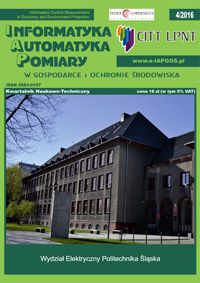
Numer Tom 6 Nr 4 (2016)
-
WYDZIAŁ ELEKTRYCZNY POLITECHNIKI ŚLĄSKIEJ – 70 LAT TRADYCJI
Paweł Sowa, Marian Pasko, Andrzej Kowalik4-8
-
KRYTYCZNY PRZEGLĄD MODELI UŻYWANYCH W SYMULACJI NUMERYCZNEJ ELEKTROFILTRÓW
Feng Zhuangbo, Zhengwei Long, Kazimierz Adamiak9-17
-
ANALIZA SYGNAŁÓW BEZPRZEWODOWYCH Z OTOCZENIA A STWIERDZENIE INTRUZJI ZA POMOCĄ SYSTEMU RADIA DEFINIOWANEGO PROGRAMOWO
Janusz Zawadzki18-21
-
OPROGRAMOWANIE I URZĄDZENIA PERYFERYJNE SYSTEMU DO POMIARU CIŚNIENIA W JAMIE BRZUSZNEJ
Michal Jurčišin, Slavomír Kardoš22-25
-
STEROWANIE ORAZ SYNCHRONIZACJA DWUPOZIOMOWEGO FALOWNIKA NAPIĘCIA W WARUNKACH PRZEJŚCIOWEJ ASYMETRII NAPIĘĆ SIECI
Tomasz Chmielewski26-31
-
OCENA NAPRĘŻEŃ W KONSTRUKCJACH STALOWYCH ZA POMOCĄ METOD ELEKTROMAGNETYCZNYCH WYKORZYSTUJĄCYCH CZUJNIKI MIKROPASKOWE I UMOŻLIWIAJĄCE MONITOROWANIE PROCESU MAGNETYZACJI AC
Przemyslaw Lopato, Grzegorz Psuj, Michał Herbko, Michał Maciusowicz32-36
-
SYSTEM DO POMIARÓW OBCIĄŻENIA WIATREM RUSZTOWAŃ ELEWACYJNYCH
Andrzej Sumorek37-42
-
CHARAKTERYSTYKA WYBRANYCH TECHNIK UKRYWANIA OBRAZU
Agnieszka Świerkosz43-48
-
PROBLEMY WSPOMAGANIA DECYZJI W SYSTEMACH UTRZYMANIA RUCHU
Ewelina Kosicka, Dariusz Mazurkiewicz, Arkadiusz Gola49-52
-
BEZPIECZEŃSTWO HOTSPOTÓW W AUTOBUSACH
Grzegorz Kozieł, Jakub Maluga53-57
-
CHARAKTERYSTYKA SYSTEMU WSPOMAGANIA POZYCJONOWANIA QZSS-ZENITH
Kamil Krasuski58-62
-
OZE W BUDOWNICTWIE NISKOENERGETYCZNYM
Agnieszka Wantuch63-66
-
UKŁAD STEROWANIA MAŁĄ ELEKTROWNIĄ WIATROWĄ Z GENERATOREM ASYNCHRONICZNYM
Kamil Możdżyński, Tomasz Gajowik, Krzysztof Rafał, Mariusz Malinowski67-72
-
WYDAJNOŚĆ PRACY Z BAZAMI DANYCH W APLIKACJACH JEE
Magdalena Grzesińska, Magdalena Waszczyńska, Beata Pańczyk73-76
-
KLASYFIKACJA STANU PROCESU SPALANIA NA PODSTAWIE ANALIZY OBRAZU PŁOMIENIA
Daniel Sawicki77-80
-
RWD JAKO NARZĘDZIE OPTYMALIZACJI STRON INTERNETOWYCH
Halina Ochim, Beata Pańczyk81-86
Archiwum
-
Tom 8 Nr 4
2018-12-16 16
-
Tom 8 Nr 3
2018-09-25 16
-
Tom 8 Nr 2
2018-05-30 18
-
Tom 8 Nr 1
2018-02-28 18
-
Tom 7 Nr 4
2017-12-21 23
-
Tom 7 Nr 3
2017-09-30 24
-
Tom 7 Nr 2
2017-06-30 27
-
Tom 7 Nr 1
2017-03-03 33
-
Tom 6 Nr 4
2016-12-22 16
-
Tom 6 Nr 3
2016-08-08 18
-
Tom 6 Nr 2
2016-05-10 16
-
Tom 6 Nr 1
2016-02-04 16
-
Tom 5 Nr 4
2015-10-28 19
-
Tom 5 Nr 3
2015-09-02 17
-
Tom 5 Nr 2
2015-06-30 15
-
Tom 5 Nr 1
2015-03-31 18
-
Tom 4 Nr 4
2014-12-09 29
-
Tom 4 Nr 3
2014-09-26 22
-
Tom 4 Nr 2
2014-06-18 21
-
Tom 4 Nr 1
2014-03-12 19
##plugins.themes.bootstrap3.article.main##
Authors
Abstrakt
Elektrofiltry są obiektem nieustającej uwagi ze względu na ich wysoką sprawność i niski koszt. Symulacja numeryczna jest bardzo skutecznym, ekonomicznym i elastycznym narzędziem przy projektowaniu przemysłowych elektrofiltrów. Ten artykuł podsumowuje dostępne modele numeryczne do symulacji różnych procesów fizycznych występujących w elektrofiltrach, włączając zjonizowane pole elektryczne, przepływ powietrza, ładowanie cząstek i ich trajektorie. Zostało potwierdzone, że dostępne modele mogą dostarczyć zadowalających wyników nawet używając sprzętu komputerowego dostępnego w zastosowaniach przemysłowych. Wzajemne sprzężenia między różnymi procesami fizycznymi mogą być analizowane podczas symulacji. Ciągle istnieją jednak problemy nierozwiązane, na przykład wybór odpowiedniego modelu turbulencji przeplywu gazu albo kryteriów sprzężeń. Przyszłe badania powinny skoncentrować się na ich rozwiązaniu. Ten przegląd omawia też nowe rodzaje elektrofiltrów zaproponowanych w ostatnich latach, na przykład elektrofiltry oparte na wyładowaniach z barierą dielektryczną albo wspomagane wyładowaniem koronowym filtry włókniste. Te nowe typy elektrofiltrów mają wysoką sprawność i niski pobór energii. Jeśli nawet prawie wszystkie nowe typy elektrofiltrów mogą być modelowane z użyciem istniejących modeli numerycznych, najtrudniejsze jest modelowanie wyładowania z barierą dielektryczną.
Słowa kluczowe:
Bibliografia
Adamiak K., Atten P.: Numerical simulation of the 2-D gas flow modified by the action of charged fine particles in a single-wire ESP. IEEE Transactions on Dielectrics and Electrical Insulation 6/2009, 608–614, [DOI: 10.1109/TDEI.2009.5128495].
Adamiak K., Atten P.: Simulation of corona discharge in point–plane configuration. Journal of Electrostatics 6/2004, 85–98, [DOI: 10.1016/j.elstat.2004.01.021].
Adamiak K.: Numerical models in simulating wire-plate electrostatic precipitators: A review. Journal of Electrostatics 8/2013, 673–680, [DOI:10.1016/j.elstat.2013.03.001].
Adamiak K.: Simulation of corona in wire-duct electrostatic precipitator by means of the boundary element method. IEEE Transactions on Industry Applications 3/1994, 381–386, [DOI: 10.1109/28.287519].
Chen C., Liu W., Li F., Lin C., Liu J., Pei J., Chen, Q.: A hybrid model for investigating transient particle transport in enclosed environments. Building Environment 1/2013, 45–54, [DOI: 10.1016/j.buildenv.2012.12.020].
Chen T., Tsai C., Yan J., Tran T., Li N.: An efficient wet electrostatic precipitator for removing nanoparticles, submicron and micron-sized particles. Separation and Purification Technology 11/2014, 27–35, [DOI: 10.1016/j.seppur.2014.08.032].
Choi B., Fletcher, C.: Turbulent particle dispersion in an electrostatic precipitator. Applied Mathematical Modeling 12/1998, 1009–1021, [DOI:10.1016/S0307-904X(98)10034-3].
Chun Y., Chang J., Berezin A., Mizeraczyk J.: Numerical modeling of near corona wire electrohydrodynamic flow in a wire-plate electrostatic precipitator. IEEE Transactions on Dielectrics and Electrical Insulation 2/2007, 119–124, [DOI:10.1109/TDEI.2007.302879].
Delfino J., Sioutas C., Malik, S.: Potential role of ultrafine particles in associations between airborne particle mass and cardiovascular health. Environmental Health Perspectives 8/2005, 934–946, [DOI: 10.1289/ehp.7938].
Dordizadeh P., Adamiak K., Castle, G.S.P.: Numerical investigation of the formation of Trichel pulses in a needle-plane geometry. Journal of Physics D: Applied Physics 8/2015, 1–13, [DOI:10.1088/0022-3727/48/41/415203].
Dramane B., Zouzou N., Moreau E., Touchard, G.: Electrostatic precipitation of submicron particles using a DBD in axisymmetric and planar configurations. IEEE Transactions on Dielectrics and Electrical Insulation 4/2009, 343–351, [DOI: 10.1109/TDEI.2009.4815162].
Farnoosh N., Adamiak K., Castle, G.S.P.: 3-D numerical analysis of EHD turbulent flow and mono-disperse charged particle transport and collection in a wire-plate ESP. Journal of Electrostatics 12/2010, 513–522, [DOI: 10.1016/j.elstat.2010.07.002].
Farnoosh N., Adamiak K., Castle, G.S.P.: 3-D numerical simulation of particle concentration effect on a single-wire ESP performance for collecting poly-dispersed particles. IEEE Transactions on Dielectrics and Electrical Insulation 2/2011, 211–220, [DOI:10.1109/TDEI.2011.5704512].
Farnoosh N., Adamiak K., Castle, G.S.P.: Numerical calculations of submicron particle removal in a spike-plate electrostatic precipitator. IEEE Transactions on Dielectrics and Electrical Insulation 10/2011, 1439–1452, [DOI: 10.1109/TDEI.2011.6032814].
Farnoosh N., Adamiak K., Castle, G.S.P.: Three-dimensional analysis of electrohydrodynamic flow in a spiked electrode-plate electrostatic precipitator. Journal of Electrostatics 10/2011, 419–428, [DOI: 10.1016/j.elstat.2011.06.002].
Feng Z., Long Z., Mo J.: Experimental and theoretical study of a novel electrostatic enhanced air filter (EEAF) for fine particles. Journal of Aerosol science 12/2016, 41–54, [DOI: 10.1016/j.jaerosci.2016.08.012].
Feng Z., Long Z., Yu, T.: Filtration characteristics of fibrous filter following an electrostatic precipitator. Journal of Electrostatics 10/2016, 52–62, [DOI:10.1016/j.elstat.2016.07.009].
Fuchs N.: On the stationary charge distribution on aerosol particles in a bipolar ionic atmosphere. Pure and Applied Geophysics 9/1963, 185–193, [DOI: 10.1007/BF01993343].
Ghazanchaei M., Adamiak K., Castle G.S.P.: Predicted flow characteristics of a wire-nonparallel plate type electrohydrodynamic gas pump using the Finite Element Method. Journal of Electrostatics 73/2015, 103–111, [DOI: 10.1016/j.elstat.2014.11.003].
Guo B., Yu A., Guo J.: Numerical modeling of electrostatic precipitation: Effect of gas temperature. Journal of Aerosol science 11/2014, 102–115, [DOI: 10.1016/j.jaerosci.2014.07.009].
Jaworek A., Krupa A., Adamiak K.: Submicron charged dust particle interception by charged drops. IEEE Transactions on Industry Applications 8/2002, 985–991, [DOI: 0.1109/28.720438].
Kherbouche F., Benmimoun Y., Tilmatine A., Zouaghi A., Zouzou, N.: Study of a new electrostatic precipitator with asymmetrical wire-to-cylinder cofiguration for cement particles collection. Journal of Electrostatics 10/2016, 7–15, [DOI: 10.1016/j.elstat.2016.07.001].
Kihm K.: Effects of nonuniformities on particle transport in electrostatic precipitators. 1987, Ph.D. dissertation, Department of Mechanical Engineering, Stanford University, Stanford, CA.
Kim H., Han B., Kim Y., Oda T., Won, H.: Submicrometer particle removal indoors by a novel electrostatic precipitator with high clean air delivery rate, low ozone emissions and carbon fiber ionizer. Indoor Air 10/2013, 369–378, [DOI: 10.1111/ina.12037].
Lancereau Q., Roux J., Achard J.: Electrohydrodynamic flow regimes in a cylindrical electrostatic precipitator. IEEE Transactions on Dielectrics and Electrical Insulation 8/2013, 1409–1420, [DOI:10.1109/TDEI.2013.6571463].
Lei H., Wang L., Wu, Z.: EHD turbulent flow and Monte-Carlo simulation for particle charging and tracing in a wire-plate electrostatic precipitator. Journal of Electrostatics 3/2008, 130–141, [DOI: 10.1016/j.elstat.2007.11.001].
Lelieveld J., Evans S., Fnais M., Giannadaki D., Pozzer, A.: The contribution of outdoor air pollution sources to premature mortality on a global scale. Nature 9/2015, 367–371, [DOI:10.1038/nature15371].
Li Z., Liu Y., Xing Y., Tran T., Le T., Tsai C.: Novel wire-on-plate electrostatic precipitator (WOP-EP) for controlling fine particle and nanoparticle pollution. Environmental Science & Technology 7/2015, 8683–8690, [DOI: 10.1021/acs.est.5b01844].
Li Z., Liu Y., Xing Y., Tran T., Le T., Tsai C.: Novel wire-on-plate electrostatic precipitator (WOP-EP) for controlling fine particle and nanoparticle pollution. Environmental Science & Technology, 7/2015, 8683–8690, [DOI: 10.1021/acs.est.5b01844].
Liang W., Lin T.: The characteristics of ionic wind and its effect on electrostatic precipitator. Aerosol Science & Technology 2/1994, 330–344, [DOI: 10.1080/02786829408959689].
Lin G., Tsai C.: Numerical modeling of nanoparticle collection efficiency of single-stage wire-in-plate electrostatic precipitators. Aerosol Science & Technology 10/2010, 1122–1130, [DOI: 10.1080/02786826.2010.512320].
Liu W., Wen J., Chao J., Yin W., Shen C., Lai D., Lin C., Liu J., Sun H., Chen Q.: Accurate and high-resolution boundary conditions and flow fields in the first-class cabin of an MD-82 commercial airliner. Atmospheric Environment 9/2012, 33–44, [DOI: 10.1016/j.atmosenv.2012.03.039].
Long Z., Yao Q., Song Q., Li S.: Three-dimensional simulation of electric field and space charge in the advanced hybrid particulate collector. Journal of Electrostatics 11/2010,835–-843, [DOI: 10.1016/j.elstat.2009.07.001].
Long Z., Yao Q., Song Q., Li S.: A second-order accurate finite volume method for the computation of electrical conditions inside a wire-plate electrostatic precipitator on unstructured meshes. Journal of Electrostatics 7/2009, 597–604, [DOI: 10.1016/j.elstat.2008.12.006].
Long Z., Yao Q.: Evaluation of various particle charging models for simulating particle dynamics in electrostatic precipitators. Journal of Aerosol science 7/2010, 702–718, [DOI: 10.1016/j.jaerosci.2010.04.005].
Long Z., Yao Q.: Numerical simulation of the flow and the collection mechanism inside a scale hybrid particulate collector. Powder Technology 1/2012, 26–37, [DOI: 10.1016/j.powtec.2011.08.045].
Lu Q., Yang Z., Zheng C., Li X., Zhao C.: Numerical simulation on the fine particle charging and transport behaviors in a wire-plate electrostatic precipitator. Advanced Powder Technology, 9/2016, 934–946, [DOI: 10.1016/j.apt.2016.06.021].
Mangili A., Gendreau A.: Transmission of infectious diseases during commercial air travel. Lancet 3/2005, 989–996, [DOI:10.1016/S0140-6736(05)71089-8].
Marlow W., Brock J.: Unipolar charging of small aerosol particles. Journal of Colloid and Interface Science 1/1975, 32–38, [DOI: 10.1016/0021-9797(75)90250-7].
Neimarlija N., Demirdzic I., Muzaferija, S.: Finite volume method for calculation of electrostatic fields in electrostatic precipitators. Journal of Electrostatics 2/2009, 37–47, [DOI: 10.1016/j.elstat.2008.10.007].
Niewulis A., Berendt A., Podlinski J., Mizeraczyk, J.: Electrohydrodynamic flow patterns and collection efficiency in narrow wire-cylinder type electrostatic precipitator. Journal of Electrostatics, 8/2013, 808–814, [DOI:10.1016/j.elstat.2013.02.002].
Niewulis A., Podlinski J., Mizeraczyk, J.: Electrohydrodynamic flow patterns in a narrow electrostatic precipitator with longitudinal or transverse wire electrode. Journal of Electrostatics, 5/2009, 123–127, [DOI:10.1016/j.elstat.2009.01.001].
Park, S., Kim, S.: Effects of electrohydrodynamic flow and turbulent diffusion on collection efficiency of an electrostatic precipitator with cavity walls. Aerosol Science & Technology 1/2003, 574–586, [DOI:10.1080/02786820300928].
Podlinski J., Dekowski J., Mizeraczyk J., Brocilo D., Chang J.: Electrohydrodynamic gas flow in a positive polarity wire-plate electrostatic precipitator and the related dust particle collection efficiency. Journal of Electrostatics 3/2006, 259–262, [DOI: 10.1016/j.elstat.2005.06.006].
Sattari P., Adamiak K., Castle, G.S.P.: Numerical simulation of Trichel pulses in a negative corona discharge in air. IEEE Transactions on Industry Applications 77/2011, 1935–1943, [DOI: 10.1109/TIA.2011.2156752].
Schmid H., Stolz S., Buggish, H.: On the modeling of the electro–hydrodynamic flow fields in electrostatic precipitators. Flow, Turbulence and Combustion 1/2002, 63–89, [DOI:10.1023/A:1015666116174].
Soldati A., Andreussi P., Banerjee S.: Direct simulation of turbulent particle transport in electrostatic precipitators. AIChE Journal 12/1993, 1910–1919, [DOI: 10.1002/aic.690391203].
Soldati A., Casal M., Andreussi P., Banerjee, S.: Lagrangian simulation of turbulent particle dispersion in electrostatic precipitators. AIChE Journal 6/1997, 1403–1413, [DOI: 10.1002/aic.690430604].
Soldati A.: Influence of large-scale streamwise vortical EHD flows on wall turbulence. International Journal of Heat and Fluid Flow 8/2002, 441–443, [DOI: 10.1016/S0142-727X(01)00154-0].
Soldati A.: On the effects of electrohydrodynamic flows and turbulence on aerosol transport and collection in wire-plate electrostatic precipitators. Journal of Aerosol Scienc 3/2000, 293–305, [DOI: 10.1016/S0021-8502(99)00055-5].
Tu Y., Song Q., Tu G., Yao. Q.: Experimental research on particulate collection performance by perforated plate in hybrid particulate collector. Proc. of the CSEE 6/2013, 51–56, [DOI: 0258-8013 (2013) 17-0051-06].
Wen T., Krichtafovitch I., Mamishev, A.: Numerical study of electrostatic precipitators with novel particle-trapping mechanism. Journal of Aerosol science 5/2016, 95–103, [DOI: 10.1016/j.jaerosci.2016.02.001].
Wu Z., Colbeck I., Zhang G.: Deposition of particles on a single cylinder by a Coulombic force and direct interception. Aerosol Science & Technology 11/1993, 40–50, [DOI: 10.1080/02786829308959619].
Wu Z., Colbeck I., Zhang G.: The deposition of particles from an air flow on a single cylindrical fiber in a uniform electrical field. Aerosol Science & Technology 1/1999, 62–70, [DOI: 10.1080/027868299304886].
Xing M., Guo B., Yu A.: Effect of electrohydrodynamic secondary flow on the particle collection in a wire-plate electrostatic precipitator. CSIRO, Melbourne-Australia, 10–12.
Zhai Z., Zhang Z., Zhang W., Chen, Q.: Evaluation of various turbulence models in predicting airflow and turbulence in enclosed environments by CFD: Part-1: summary of prevent turbulence models. HVAC&R Research 11/2007, 853–870, [DOI:10.1080/10789669.2007.10391459].
Zhang X., Wang L., Zhu, K: Particle tracking and particle-wall collision in a wire-plate electrostatic precipitator. Journal of Electrostatics 9/2005, 1057–1071, [DOI: 10.1016/j.elstat.2005.02.002].
Zhang Z., Chen, Q.: Comparison of the Eulerian and Lagrangian methods for predicting particle transport in enclosed spaces. Atmospheric Environment 8/2007, 5236–5248, [DOI: 10.1016/j.atmosenv.2006.05.086].
Zhang Z., Zhang W., Zhai Z., Chen, Q.: Evaluation of various turbulence models in predicting airflow and turbulence in enclosed environments by CFD: Part-2: comparison with experimental data from literature. HVAC&R Research 11/2007, 871–886, [DOI:10.1080/10789669.2007.10391460].
Zhao B., Chen C., Yang X., Lai, A: Comparison of three approaches to model particle penetration coefficient through a single straight crack in a building envelope. Aerosol Science & Technology 2/2010, 405–416, [DOI: 10.1080/02786821003689937].
Zhao L., Adamiak K.: Effects of EHD and external air flows on electric corona discharge in point-plane/mesh configurations. IEEE Transactions on Industry Applications 2/2009, 16–21, [DOI: 10.1109/TIA.2008.2009389].
Zhao L., Adamiak K.: EHD flow in air produced by electric corona discharge in pin–plate configuration. Journal of Electrostatics 3/2005, 337–350, [DOI: 10.1016/j.elstat.2004.06.003].
Zhao L., Adamiak K.: Numerical simulation of the effect of EHD flow on corona discharge in compressed air. IEEE Transactions on Industry Applications 2/2013, 298–304, [DOI: 10.1109/TIA.2012.2228832].
Zhao L., Adamiak K.: Numerical simulation of the electrohydrodynamic flow in a single wire-plate electrostatic precipitator. IEEE Transactions on Industry Applications 6/2008, 683–691, [DOI: 10.1109/TIA.2008.921453].
Zouaghi A., Zouzou N., Mekhaldi A., Gouri R.: Submicron particles trajectory and collection efficiency in a miniature planar DBD-ESP: Theoretical model and experimental validation. Journal of Electrostatics 8/2016, 7–15, [DOI: 10.1016/j.elstat.2016.05.004].
##plugins.themes.bootstrap3.article.details##
Abstract views: 684
Downloads: 261
Licencja

Utwór dostępny jest na licencji Creative Commons Uznanie autorstwa – Na tych samych warunkach 4.0 Miedzynarodowe.



