

Castle in Siewierz. Preservation and revalorisation of the historic ruins
Article Sidebar
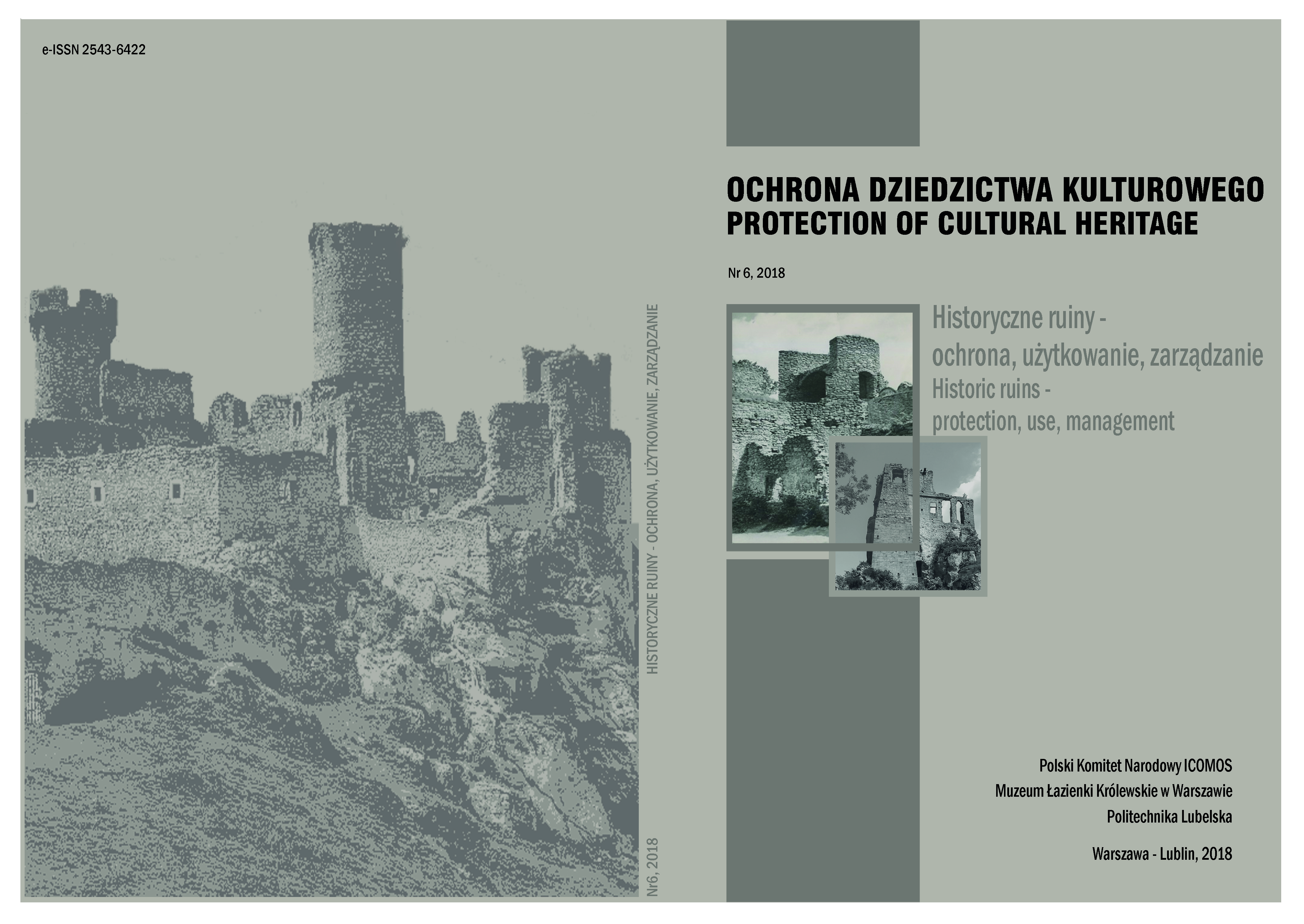
Issue No. 6 (2018)
-
Protection of historical ruins - research and project problems on the example of the castle in Sochaczew
11-27
-
Protecting and displaying walls of the Człuchów Castle - former practices and current issues
29-42
-
Ambiguous role of post-industrial ruins in the cultural landscape of Poland
43-52
-
The attractiveness of a permanent (durabel) ruin. Contemporary functioning of the historical ruins of castles in Małopolska
53-71
-
Stocktaking methods of facilities in a state of ruin
73-86
-
Charter on the Protection of Historic Ruins – theory and practice. Examples from Lesser Poland
87-95
-
Urban design concepts of ruins in Gdańsk historical area
97-104
-
Protection of historical ruins on the Polish-German border. A case of cultural heritage of the former Duchy of Pomeranian
105-116
-
Protection and preservation of ruins - changes in the methods used in the Mazovian region
117-134
-
'Foundation of Memory'. About the experience of space and remnants of the former concentration camp at the Kl Plaszow memorial site
135-143
-
Some forts of Cracow Fortress become historical ruins. Purpose or necessity
145-151
-
Castle in Siewierz. Preservation and revalorisation of the historic ruins
153-162
-
Hammershus Castle - "Good Practices" and Managing Permanentl Ruin
163-176
-
Selected issues of the investment process implementation in historic buildings on the example of the Castle of the Dukes of Mazovia in Ciechanów
177-190
-
Protection of historic ruins - objectives for theory and practice
191-200
-
Biological corrosion and vegetation in the aspect of permanent ruin
201-212
-
Salt mill complex and warehouses of the former salt mine in Wapno. Considerations and premises for the protection of 20th-century post-industrial buildings as a permanent ruin
213-223




Main Article Content
Authors
Abstract
The conservation and restoration work was carried out on the ruins of Siewierz Castle between 2007 and 2010. The restoration and conservation work was made after detailed historical research conducted by Mr Artur Rok. Recomposition and revealment of the obliterated functional and spatial construction of the castle was the major aspect of the work as well as the conservation of stone and brick surface of the walls.
The foundations of the Renaissance west and south wings of the castle were revealed and partly taken under conservation and reconstruction work. Tha main reconstruction work was carried out on the south walls of the castle which were badly damaged before the Second World War. The purpose of the work was purely technical and it led to show the image of the south part of the castle despite the fact that the highest tier was not reconstructed in order to maintain the appearance of ruin. The courtyard of the castle was arranged to feature the foundation of 13th century bergfried ( defensive tower) and the keep which is now open to visitors. Also the draw bridge was reconstructed which is not very common action in castles restoration in Poland.
The restoration work in The Castle of Siewierz was conducted according to the rules of Venice Charter and Historican Ruins Protection Charter in order to maintain the uttermost authenticity of the castle.